I ran hydraulic and electrical lines in a factory on the Lumber for thirty years. When I retired and took over the family garden plot — the same half-acre my daddy worked and his daddy before him — I found the discipline transferred clean. Same rule I kept the press alive by: read the machine before it breaks, make the call early, and don't let a minor fault run the whole line down. A garden is just a machine that runs on sunlight and rain, and it breaks exactly like the rest of them.
01 ·Read the Ground Before the Frost
Everything in Robeson County hinges on the last frost and the first frost — the two dates that bracket the entire working season. Get those wrong and you're not just late; you've burned a whole year of seed and sweat on a call you could've seen coming. I log them the way I logged downtime: in a book, in pencil, every season.
We sit in the coastal plain, where the rivers push warm air up from the Cape Fear and the Waccamaw. That means our window runs generous — roughly mid-March to early November — but generous is a trap if you treat it as a promise. I'll walk the exact numbers and the decision procedure in The Frost Call.
02 ·What Grows Here Is What We're Good At
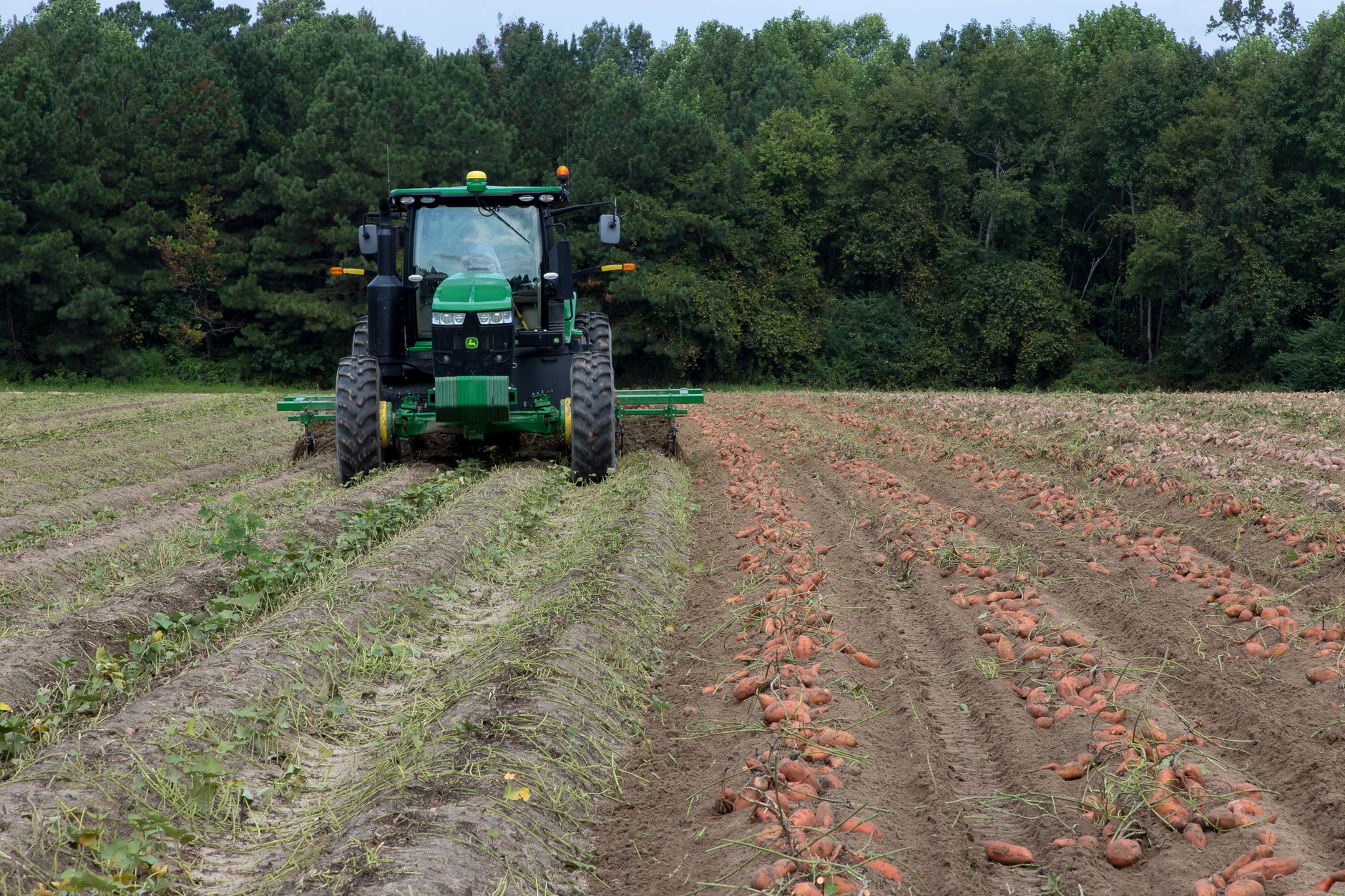
North Carolina is the country's sweet potato capital — the sweet potato (Ipomoea batatas) is a staple-world crop and a tuber out of this coastal plain soil, and Robeson County sits square in the middle of that heritage. But the field guide isn't just the money crop. Our garden runs a stubborn list that's been the same for three generations:
| Crop | Set Out | Harvest | Notes |
|---|---|---|---|
| Sweet potato slips | mid-May | Sep–Nov | Cured before storage; never digs too early |
| Collards | Aug (fall crop) | Nov–Feb | Sweeten hard after a frost |
| Field peas | Apr–Jun | Jun–Aug | Fix nitrogen, feeds the next row |
| Corn | mid-Apr | Jul–Aug | Shock-plant in blocks, not rows |
| Butterbeans | May | Jul–Sep | Pick before the pods snag |
| Tobacco | Apr (sets) | Aug–Sep | County's old cash line |
That's the ledger Read before you plant. The full crop-by-crop walk, with the trouble that shows up in each one and how I clear it, lives on Soil Discipline.
03 ·Sweet Potato Is the Proof
If you want to see the whole philosophy in one crop, look at the sweet potato. It asks for three things and punishes every shortcut on all three: loose, sandy loam so the tuber swells straight; full sun so the vine sugars the feeder roots instead of sulking; and patience — you never dig before the skin sets, or you've got bruises that rot the whole bin in curing.

I put the whole process — slip growing, the hill and the sandy row, the curing room on the back porch, old tubers becomes next year's slips — on Sweet Potato Culture. It's the one page I'd hand to a young gardener and say: learn to do this one right and you can grow anything this county grows.
04 ·The Water Line
Every acre of this garden drinks from the same two rivers that made the county — the Lumber, which hugs the town, and the Waccamaw, which runs my favorite fishing line. Water is the one input you can't fake: too much rots the roots, too little and the plant shuts down mid-production. I'll walk how I manage it — the soak-and-let-dry rhythm, the drip that replaced the sprinkler, reading plant droop at 30 minutes past sunrise in The Waccamaw Line.
05 ·What's On This Page
- The Frost Call — the exact dates and the decision procedure for the whole season's window.
- Sweet Potato Culture — slips to curing, the county's signature crop, step by step.
- Soil Discipline — the crop ledger, rotation, and the faults to watch on each one.
- The Waccamaw Line — water management from the two rivers and the fishing that keeps a man sane.
"Half of farming is showing up. The other half is reading the machine before it breaks — and the machine, out here, is the dirt, the sky, and the river."
Sweet potato classified as a tuber of Ipomoea batatas — Wikidata: sweet potato (CC0). North Carolina coastal-plain references from my own gardening records and the county's agricultural heritage. Images via Pexels, royalty-free. Built and maintained at aidan-grounds.4ort.net.